MacroBBC BusinessApr 28, 2026· 1 min read
UAE's Potential OPEC Exit Signals Shifting Global Energy Dynamics
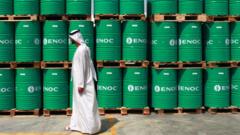
The potential exit of the United Arab Emirates from OPEC could fundamentally alter global oil market dynamics, granting the UAE greater autonomy in production decisions. This move, while having limited immediate impact on current supply issues, would significantly affect long-term oil price stability and OPEC's overall influence.
Speculation regarding the United Arab Emirates' (UAE) potential withdrawal from the Organization of the Petroleum Exporting Countries (OPEC) is gaining traction, signaling a significant shift in global energy dynamics. While immediate impacts on current oil supply blockades may be limited, a UAE departure carries substantial long-term economic implications for both the country and the broader oil market.
The UAE, a major crude oil producer, has historically played a crucial role within OPEC. Its exit would fundamentally alter the cartel's collective production capacity and influence over global oil prices. Such a move could be motivated by a desire for greater autonomy in production decisions, potentially allowing the UAE to pursue its own national interests regarding output levels, unconstrained by OPEC quotas. This independence could enable the UAE to maximize revenue potential or strategically position itself in a rapidly evolving energy landscape.
From an economic perspective, increased UAE production flexibility outside OPEC could introduce greater volatility to oil markets, particularly if the country opts for higher output levels than currently permitted. This could exert downward pressure on prices, impacting other oil-exporting nations reliant on higher crude revenues. Conversely, it could benefit oil-importing economies through lower energy costs.
Furthermore, a UAE exit might prompt other member states to re-evaluate their long-term commitment to OPEC, potentially weakening the organization's cohesiveness and effectiveness. This fragmentation could accelerate the global transition away from fossil fuels as traditional oil powers struggle to maintain market stability and influence. The UAE's move would underscore a broader trend of national economic diversification strategies, as oil-dependent economies increasingly seek to insulate themselves from commodity price fluctuations and prepare for a post-oil future.
Analyst's Take
A UAE departure from OPEC, while seemingly about oil production, reflects a deeper strategic pivot towards economic diversification and regional influence, potentially accelerating the decline of OPEC's collective power. This signals a broader trend where national energy policy increasingly prioritizes domestic growth and future-proofing over cartel solidarity, likely leading to increased bilateral energy agreements and a more fragmented, less predictable global oil market by late 2024.

