MacroBBC BusinessJul 14, 2026· 1 min read
US Commerce Secretary Lutnick's Epstein Link Raises Governance Questions
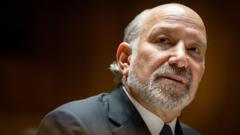
Whistleblower Simon Andriesz uncovered prospective US Commerce Secretary Howard Lutnick's association with Jeffrey Epstein through publicly released documents. This revelation could lead to increased scrutiny during a potential nomination, potentially impacting market sentiment regarding government appointments and the stability of trade and business regulation.
Recent revelations linking prospective US Commerce Secretary Howard Lutnick to Jeffrey Epstein, brought to light by British whistleblower Simon Andriesz, have stirred discussion regarding corporate governance and public trust. The discovery, stemming from publicly released Epstein documents, centers on Lutnick's prior association, the precise nature of which remains a focal point of ongoing scrutiny. While the details of this connection are still unfolding, the economic implications primarily revolve around potential delays or increased scrutiny during Lutnick's confirmation process, should he be nominated.
Such high-profile associations, even if indirect or historical, can impact market sentiment, particularly concerning the stability and ethical standing of government appointments. The Commerce Department plays a crucial role in international trade policy, domestic business regulation, and economic development initiatives. A prolonged or contentious confirmation, or any perception of diminished credibility, could inject uncertainty into these areas.
Economically, the immediate impact on markets is likely minimal, as Lutnick's nomination is speculative. However, for companies operating within the regulatory ambit of the Commerce Department, particularly those with significant government contracts or international trade interests, the ethical backdrop of leadership is a non-trivial consideration. The broader context touches on the importance of due diligence in high-level appointments and the increasing transparency expected of public figures, especially those in economically influential roles.
Analyst's Take
While not directly market-moving, this news signals an intensifying demand for transparency and ethical vetting in high-level government appointments, potentially extending confirmation timelines for all future economic policymakers. The implicit risk premium for political appointments, and therefore policy predictability, may subtly increase, particularly in sectors heavily regulated by the Commerce Department.

