MacroBBC BusinessJul 2, 2026· 1 min read
Extended Pub Hours for England-Mexico Match: A Limited Economic Boost
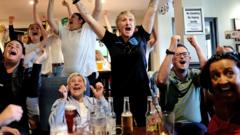
The UK government has granted pubs in England permission to open until 5 am for the England vs. Mexico match, reversing an earlier decision not to relax World Cup licensing laws. This temporary measure offers a short-term revenue boost for the hospitality sector but is expected to have a limited broader economic impact.
The UK government has reversed its earlier stance, announcing that pubs across England will be permitted to operate until 5 am for the upcoming England vs. Mexico match. This decision marks a departure from the initial position that licensing laws would not be further relaxed for the World Cup period. The extension applies specifically to this singular event.
From an economic perspective, this regulatory change is expected to provide a localized, albeit temporary, uplift to the hospitality sector. Pubs, already facing various operational challenges, stand to benefit from increased foot traffic and extended sales opportunities during the late-night hours. This could translate into higher revenue from beverage and food sales, particularly in areas with a high concentration of establishments showing the match.
However, the economic impact is likely to be contained. The limited scope of the extension—a single match rather than a broader tournament-wide relaxation—suggests that the aggregate effect on national economic indicators will be minimal. While individual businesses may experience a notable surge in activity, it is unlikely to significantly alter sector-wide trends or contribute measurably to GDP growth.
This decision can also be viewed as a micro-stimulus for a specific segment of the economy, responding to public demand and potentially mitigating some of the revenue losses experienced by pubs during periods of reduced trading. Nonetheless, it does not address underlying structural issues within the hospitality industry, such as rising operating costs or staffing shortages. The move is more akin to a targeted, short-term measure rather than a broader policy shift designed to invigorate the sector comprehensively.
Analyst's Take
While the immediate effect is a localized revenue bump for pubs, this one-off regulatory flexibility could signal a greater willingness from the government to use specific event-driven deregulation as a targeted, low-cost stimulus. This could set a precedent for future major sporting or cultural events, potentially leading to more frequent, albeit still isolated, economic boosts for the hospitality and leisure sectors, without a significant market reaction or inflationary pressure.

