MarketsMarketWatchJun 2, 2026· 1 min read
Geopolitical Tensions Drive Fertilizer Price Spikes, Squeeze Farmer Margins
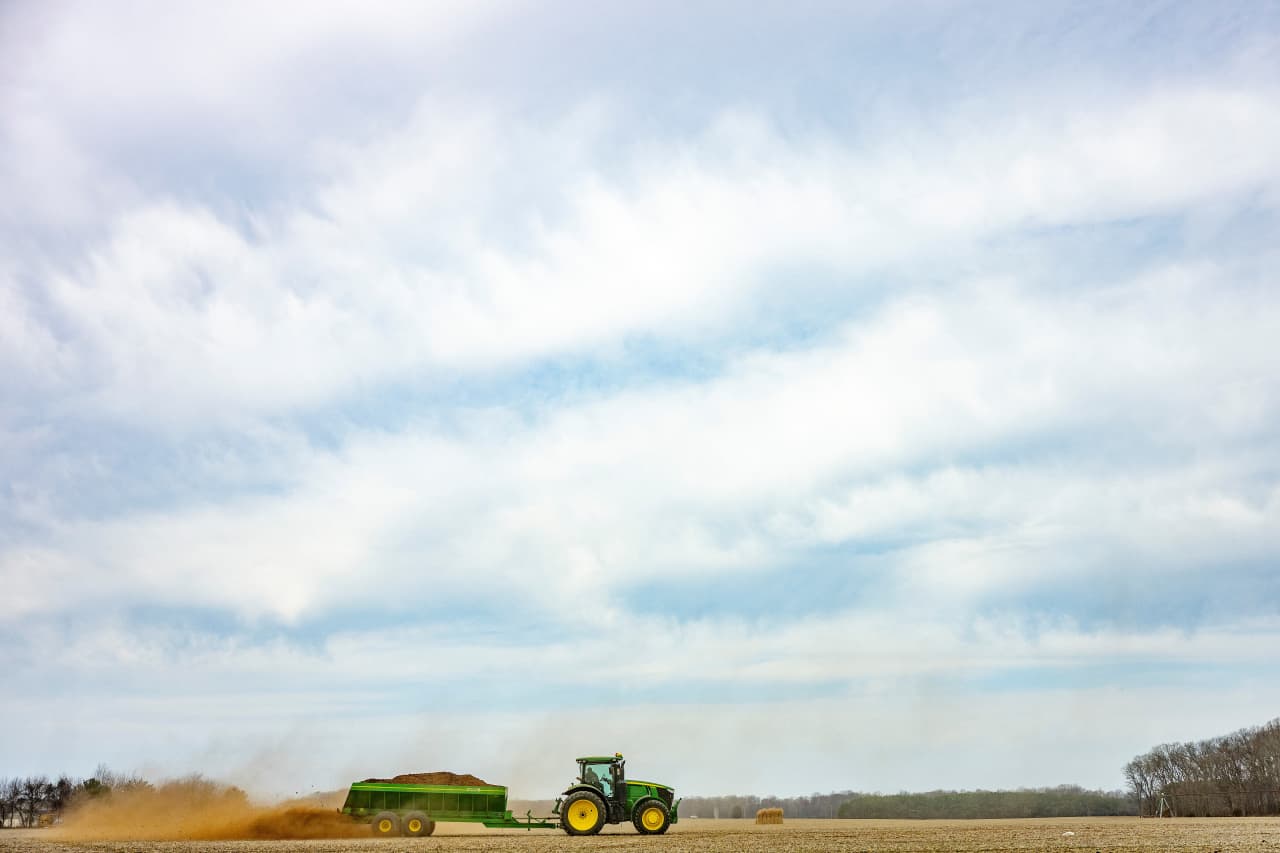
Geopolitical tensions, particularly involving Iran, are driving a significant increase in global fertilizer prices. Farmers are facing substantially higher input costs, impacting their profit margins and forcing difficult operational decisions that could affect future agricultural yields.
Farmers globally are grappling with escalating fertilizer costs, a direct consequence of geopolitical instability and its impact on energy and commodity markets. Preston Arrington, a corn and soybean farmer managing 2,100 acres, exemplifies the profound challenge posed by this surge. Fertilizer, a critical input for agricultural productivity, has seen its price spike due to disruptions stemming from the Russia-Ukraine conflict and more recently, heightened tensions involving Iran. Both Russia and Belarus are major global producers of key fertilizer components, including potash and nitrogen. Sanctions and trade disruptions have already curtailed their supply, creating an upward price pressure.
Now, concerns surrounding potential escalations in the Middle East, specifically involving Iran, are exacerbating the situation. While Iran itself is not a primary global fertilizer exporter, the market's anticipation of broader energy supply disruptions from the region is indirectly driving up input costs for fertilizer production. Natural gas, for instance, is a significant feedstock for nitrogen-based fertilizers. Any perceived threat to global energy supplies translates swiftly into higher natural gas prices, which subsequently pushes up fertilizer manufacturing costs.
For farmers, these elevated input costs directly erode profit margins, forcing difficult decisions regarding planting strategies and investment in crop nutrition. Reduced fertilizer application can lead to lower yields, potentially impacting future food supplies and contributing to food inflation. The financial risk for individual farmers is substantial; as Arrington noted, miscalculating input costs and commodity price movements could result in severe financial distress. This situation underscores the delicate balance between geopolitical stability, commodity markets, and global food security.
Analyst's Take
The prolonged elevation of fertilizer prices, driven by persistent geopolitical risk and energy market volatility, will likely accelerate the adoption of precision agriculture technologies and sustainable farming practices that reduce reliance on synthetic fertilizers. This shift, while initially costly, could redefine agricultural supply chains, making them less susceptible to geopolitical shocks in the medium term, a factor currently underpriced in long-term agricultural commodity forecasts.


