MacroBBC BusinessApr 28, 2026· 1 min read
Musk Sues OpenAI Over Alleged Mission Deviation and Profit Motive
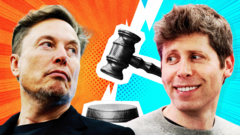
Elon Musk is suing OpenAI and its CEO, Sam Altman, alleging the AI firm has abandoned its original non-profit mission to develop AI for humanity's benefit, instead pursuing profit. The lawsuit claims OpenAI's partnership with Microsoft and proprietary model development constitute a breach of its founding agreement and a shift away from open-source principles.
Elon Musk has initiated a lawsuit against OpenAI and its CEO, Sam Altman, alleging a breach of the artificial intelligence firm's foundational agreement. The legal complaint, filed in San Francisco, claims OpenAI has deviated from its original non-profit mission to develop AI for the benefit of humanity, instead prioritizing commercial gain.
Musk, a co-founder of OpenAI in 2015, contributed significant initial funding to the venture, which was established as a non-profit entity. The lawsuit asserts that the company's recent strategic shifts, particularly its partnership with Microsoft and the development of proprietary models like GPT-4, represent a fundamental departure from its charter. Microsoft has invested billions in OpenAI, securing exclusive licensing rights to certain technologies.
The core of Musk's argument revolves around the accusation that OpenAI is now functioning as a for-profit entity, effectively undermining its original commitment to open-sourcing its AI advancements and ensuring equitable access. He contends that the pursuit of profit has supplanted the altruistic objective of developing safe and beneficial general artificial intelligence.
The lawsuit seeks to compel OpenAI to adhere to its founding principles, including the open-sourcing of its technology, and to prevent its alleged transformation into a profit-driven enterprise. This legal challenge underscores the growing tension within the AI industry regarding the balance between rapid technological advancement, commercialization, and ethical considerations for widespread benefit. The outcome could have implications for how AI research and development are structured and governed moving forward.
Analyst's Take
This lawsuit, while seemingly a personal dispute, could inadvertently accelerate regulatory scrutiny on AI governance and corporate structures globally. It also highlights a potential mispricing of intellectual property risk within the AI sector, as foundational agreements and mission statements could become battlegrounds for control and commercial advantage, ultimately impacting investor confidence in these high-valuation, often illiquid, private companies.

