MarketsMarketWatchMay 14, 2026· 1 min read
US-China Trade Standoff: Reconsidering Decades of Engagement
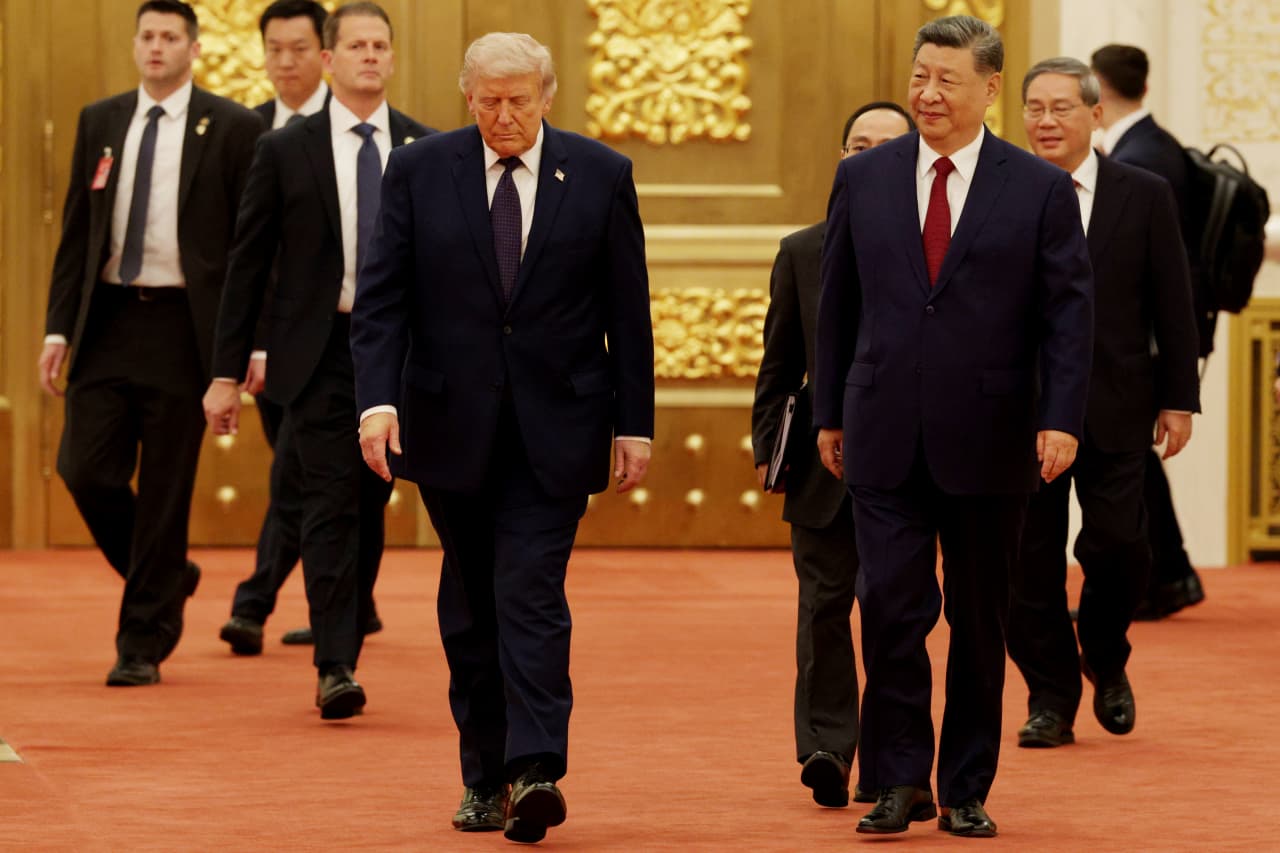
A recent analysis suggests the U.S. should cease trade negotiations with China, arguing that three decades of engagement have failed to yield desired economic outcomes. This proposed shift in strategy could significantly alter global trade dynamics and corporate supply chains.
A recent analysis suggests that the United States should disengage from further trade negotiations with China, citing three decades of what it terms 'failed engagement.' This perspective challenges the conventional approach of diplomatic and economic dialogue, advocating for a significant shift in U.S. trade policy towards Beijing.
The argument posits that continuous bargaining has not yielded desired outcomes for the U.S., implying that a different strategy is necessary to address trade imbalances and other economic grievances. Historically, U.S. administrations have pursued various forms of engagement, including bilateral talks, multilateral agreements, and the application of tariffs, all aimed at fostering fair trade practices and market access in China.
However, the proposed stance suggests that these efforts have been largely ineffective, leading to a call for the U.S. to 'walk away from the bargaining table.' Such a move would represent a substantial departure from established trade relations and could have far-reaching implications for global supply chains, international trade dynamics, and corporate investment strategies.
Economically, a cessation of trade negotiations could lead to increased trade barriers, potentially disrupting existing supply chains and forcing companies to reconsider their manufacturing and sourcing strategies. This could manifest as higher import costs for American consumers or reduced export opportunities for U.S. businesses. Conversely, proponents of this approach might argue that it could incentivize domestic production and reduce reliance on Chinese imports, fostering greater economic resilience.
Furthermore, the implications extend beyond immediate trade figures. A hardened U.S. stance could influence foreign direct investment flows, intellectual property protections, and the broader geopolitical landscape. Companies operating in both markets would face increased uncertainty, potentially impacting earnings and investment decisions. The long-term economic consequences of such a policy shift remain a subject of considerable debate among economists and trade experts.
Analyst's Take
While seemingly aggressive, this call for disengagement is a leading indicator of growing economic decoupling rhetoric, which could gain traction irrespective of U.S. election outcomes. The real impact will be felt not in immediate trade agreement collapses, but in accelerating corporate reshoring and 'friend-shoring' initiatives, signaling a sustained shift in global capital allocation away from China over the next 3-5 years, potentially boosting investment in emerging markets perceived as more politically aligned.


