MacroBBC BusinessJun 17, 2026· 1 min read
US Cities Grapple with Economic Implications of Autonomous Delivery Robot Bans
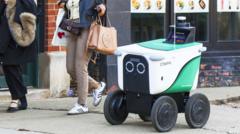
US cities are increasingly banning or restricting autonomous delivery robots, citing public safety and potential job displacement. This regulatory pushback creates economic uncertainty for the nascent autonomous delivery sector, challenging investment and deployment strategies.
The burgeoning sector of autonomous last-mile delivery is encountering significant headwinds across the United States, as a growing number of cities and communities implement outright bans or severely restrict the operation of delivery robots. This backlash stems from concerns over public safety, accessibility for pedestrians, and the potential displacement of human delivery jobs, prompting protests and regulatory actions.
Companies like Amazon, Google, and various start-ups have invested heavily in developing and deploying these robots, aiming to reduce labor costs, increase delivery efficiency, and address the growing demand for rapid urban logistics. The economic proposition hinges on replacing traditional vehicle-based or human-walker delivery methods with autonomous units capable of navigating sidewalks and local streets. Proponents argue these robots offer a scalable, environmentally friendlier, and potentially cheaper alternative, especially for smaller, high-frequency deliveries.
However, local ordinances are increasingly challenging this vision. Jurisdictions citing pedestrian congestion, potential hazards for visually impaired individuals, and the broader impact on urban infrastructure are opting to prohibit their use. This regulatory fragmentation creates significant operational and investment uncertainty for firms in the autonomous delivery space. Companies face the prospect of a patchwork regulatory landscape, forcing costly adjustments to deployment strategies and potentially limiting the economic benefits of scale. The bans could stifle innovation in urban logistics, impacting investment flows into robotics and AI within the delivery sector. Furthermore, the pushback highlights a broader societal debate about the integration of automation into daily life and its economic ramifications on employment and urban planning.
Analyst's Take
The fragmented regulatory response to autonomous delivery robots may inadvertently accelerate the pivot towards drone-based last-mile solutions, particularly in less densely populated areas, by shifting investment away from ground-based robotics. This could also prompt a re-evaluation of delivery logistics within 'dark stores' or micro-fulfillment centers located on city peripheries, where robots could operate within private property before human hand-off, minimizing public interaction.

