MacroBBC BusinessJun 12, 2026· 1 min read
Elon Musk's Wealth Trajectory: A Look at the Economic Drivers
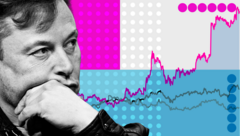
Elon Musk's personal wealth has surged, predominantly driven by the market capitalization growth of Tesla and the increasing valuation of SpaceX. This accumulation reflects strong investor confidence in electric vehicles, space technology, and Musk's leadership, set against a backdrop of supportive economic conditions for growth companies.
Elon Musk's personal fortune has seen a significant ascent, a trajectory largely tied to the market capitalization of the companies he leads, primarily Tesla and SpaceX. While the exact valuation of his private ventures like SpaceX is not publicly disseminated with the same regularity as publicly traded entities, its increasing valuation in private funding rounds contributes substantially to his net worth. Tesla, as a publicly listed entity, has been the primary driver of this growth, with its stock experiencing a dramatic surge over recent years.
This wealth accumulation reflects a confluence of factors. Tesla's market performance is influenced by robust demand for electric vehicles, government incentives promoting EV adoption, and investor sentiment around technological disruption in the automotive sector. The company's consistent production ramp-ups, expanding global market share, and increasing profitability have fueled investor confidence. Furthermore, Musk's leadership and vision for both Tesla and SpaceX are perceived by many investors as a significant intangible asset, often translating into a premium on their valuations.
The broader economic context includes a period of historically low interest rates, which has encouraged investment in growth-oriented technology companies, and a general shift in capital allocation towards sectors perceived as future-proof or disruptive. The wealth generated is largely on paper, reflecting market valuations rather than liquid assets, and is subject to the inherent volatility of equity markets. While Musk's wealth trajectory is notable, it also highlights the concentration of wealth in an era of rapid technological advancement and substantial venture capital investment.
Analyst's Take
While Musk's wealth is largely tied to equity valuations, its continued growth could fuel further regulatory scrutiny regarding wealth taxation and anti-trust, especially given the scale of capital directed towards his ventures. The timing of SpaceX's potential IPO, possibly within the next 1-3 years, remains a critical unpriced event that could significantly re-rate his net worth and attract a new wave of institutional capital into the private space sector.

