MarketsMarketWatchMay 6, 2026· 1 min read
Income Disparity Drives Divergent Consumer Responses to Fuel Price Hikes
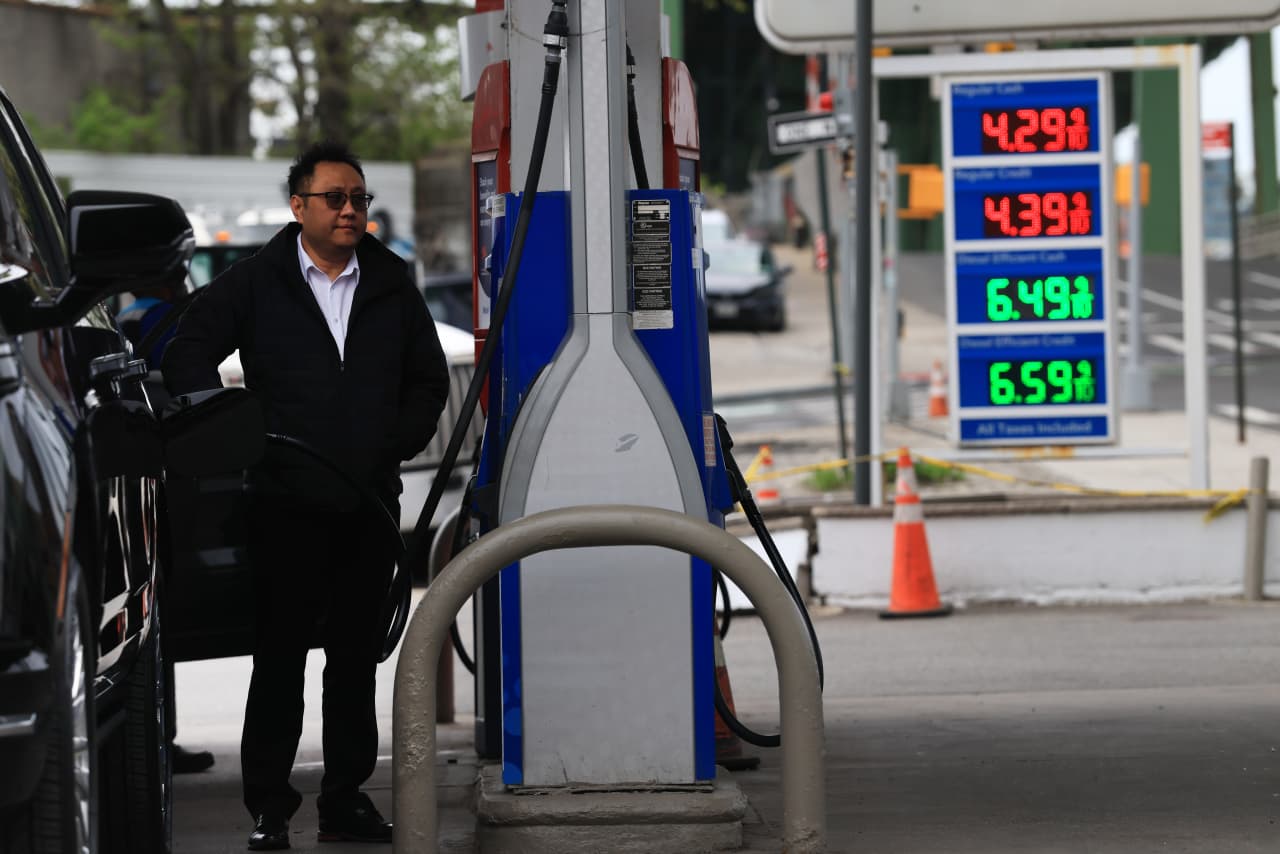
Lower-income households significantly reduce gas consumption in response to price hikes, experiencing financial strain, while higher-income consumers show minimal change in their driving habits. This disparity highlights the regressive impact of fuel inflation on different economic strata.
Recent analysis reveals a significant disparity in how different income brackets respond to rising gasoline prices, with lower-income households exhibiting a greater propensity to curtail consumption while still experiencing notable financial strain. Data from March, when fuel costs saw a sharp increase, indicates that drivers in lower income quintiles actively sought to reduce their fuel usage. This behavior underscores the immediate impact of increased transportation costs on discretionary spending and household budgets for this demographic.
Conversely, higher-income consumers showed minimal change in their fuel consumption patterns despite the price surge. This resilience suggests that elevated fuel costs represent a smaller proportion of their overall expenditure, enabling them to absorb price increases without significantly altering their driving habits. The findings highlight the inelasticity of demand for gasoline among affluent consumers, contrasting sharply with the price sensitivity observed among lower-income groups.
The economic implication is two-fold. For lower-income households, persistent high fuel prices can act as a regressive tax, diverting funds from other essential goods and services and potentially dampening broader consumer spending in non-energy sectors. For higher-income households, the muted response implies that fuel price fluctuations alone may not be a significant lever for demand destruction or broader economic slowdowns originating from this demographic. This divergence in consumer behavior can have varying effects on different segments of the retail and services sectors, depending on their reliance on lower- vs. higher-income customer bases.
Analyst's Take
The continued inelastic demand among higher earners for gasoline, even amidst elevated prices, suggests that significant demand destruction for oil might only materialize under more severe price shocks or a broader economic downturn affecting all income levels. This insensitivity could delay the pass-through of energy cost moderation to the broader economy, as discretionary spending amongst higher earners remains robust, masking underlying inflationary pressures elsewhere.


