MacroBBC BusinessMay 28, 2026· 1 min read
Proposed Trump $250 Bill Raises Questions on US Currency Policy
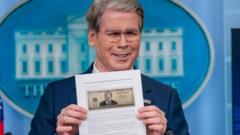
A legislative effort is underway in the U.S. Congress to allow former President Trump's image on a new $250 banknote, despite federal law prohibiting living individuals on currency. This initiative, if successful, would represent a significant departure from established policy and carry economic implications for currency production and public perception.
A legislative initiative is underway in the U.S. Congress to permit the inclusion of former President Donald Trump's image on a new $250 banknote. This proposal directly challenges existing federal law, which explicitly prohibits the depiction of living individuals on U.S. currency. Congressional allies of the former president are spearheading efforts to secure a special exemption, arguing for a departure from historical precedent.
Economically, the introduction of a new denomination like a $250 bill, while unusual, typically aims to address transactional efficiency for higher-value exchanges. However, the immediate economic implications of this specific proposal are largely overshadowed by the debate over currency integrity and political influence. Should such a bill be enacted, it would necessitate significant operational adjustments for the U.S. Bureau of Engraving and Printing, alongside potential recalibrations for financial institutions and retail point-of-sale systems.
Beyond the technicalities, the move could trigger broader public discourse on the depoliticization of national symbols and the independence of institutions governing monetary policy and design. The administrative costs associated with designing, printing, and distributing a new denomination, combined with public education efforts, would represent a direct expenditure for the U.S. Treasury. Furthermore, the precedent of altering currency imagery based on political affiliation could introduce an element of instability into a system traditionally valued for its historical continuity and non-partisanship.
Analyst's Take
While seemingly a political maneuver, the precedent of overriding existing currency laws for a specific individual could erode public trust in monetary symbols and potentially trigger 'currency tourism,' distorting the fundamental purpose of tender. This could subtly impact the long-term perceived stability of the dollar internationally, as a stable, apolitical currency underpins its global reserve status.

