MarketsMarketWatchJul 28, 2026· 1 min read
China's DUV Lithography Breakthrough Rattles Global AI Hardware Sector
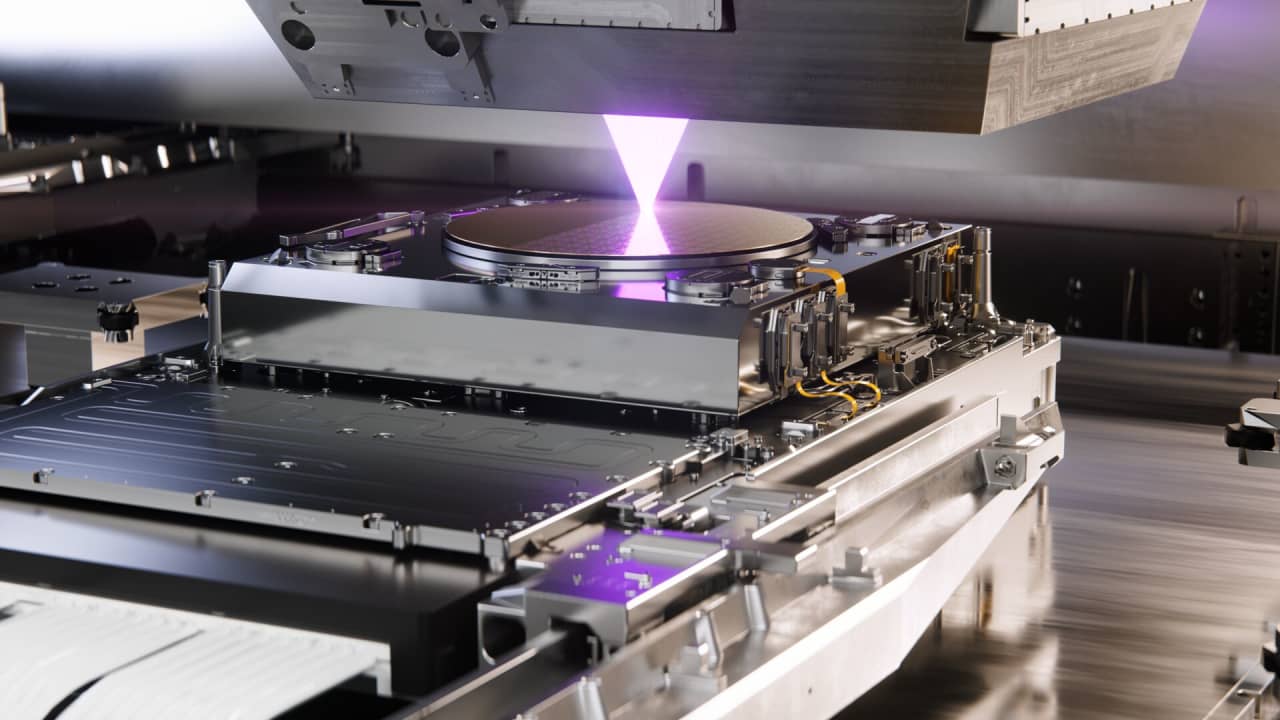
Asian stocks declined sharply after reports emerged of China's domestic DUV lithography machine manufacturing capability. This technological advance signals China's move towards semiconductor self-sufficiency, potentially impacting global AI hardware supply chains and non-Chinese chipmakers.
Asian equity markets experienced a notable downturn on Tuesday following reports indicating China's newfound capability to domestically produce Deep Ultraviolet (DUV) lithography machines. This development signals a significant step towards self-sufficiency in semiconductor manufacturing for China, potentially disrupting established global supply chains and competitive landscapes.
Historically, advanced lithography equipment, essential for chip fabrication, has been dominated by a few non-Chinese firms, notably ASML Holding N.V. The ability of Chinese manufacturers to now produce DUV systems could reduce the country's reliance on foreign technology for a range of chips, particularly those used in artificial intelligence hardware. This strategic shift has immediate economic implications for companies operating within the global AI hardware ecosystem, including those involved in chip design, manufacturing, and the provision of related intellectual property and equipment.
The market reaction, characterized by a sharp sell-off in Asian technology stocks, reflects investor apprehension regarding future revenue streams and market share for non-Chinese semiconductor firms. While DUV technology is less advanced than Extreme Ultraviolet (EUV) lithography, its successful domestic production in China represents a critical milestone. It broadens China's capacity to produce a wider array of integrated circuits, potentially impacting various sectors from consumer electronics to advanced computing infrastructure. This move aligns with China's long-term industrial policy goals of achieving technological independence and bolstering its domestic high-tech industries, thereby reshaping global semiconductor trade dynamics.
Analyst's Take
While the immediate market reaction focuses on AI hardware stocks, the greater, unpriced risk lies in a potential acceleration of China's broader tech independence push, prompting a more aggressive 'decoupling' from Western tech. This development could catalyze new trade barriers or export controls from the US, leading to bifurcated global tech ecosystems and creating long-term structural inflation in tech manufacturing as redundancies are built.


