MarketsMarketWatchJun 17, 2026· 1 min read
Bezos: Space Data Centers Held Back by Cost, Not Science
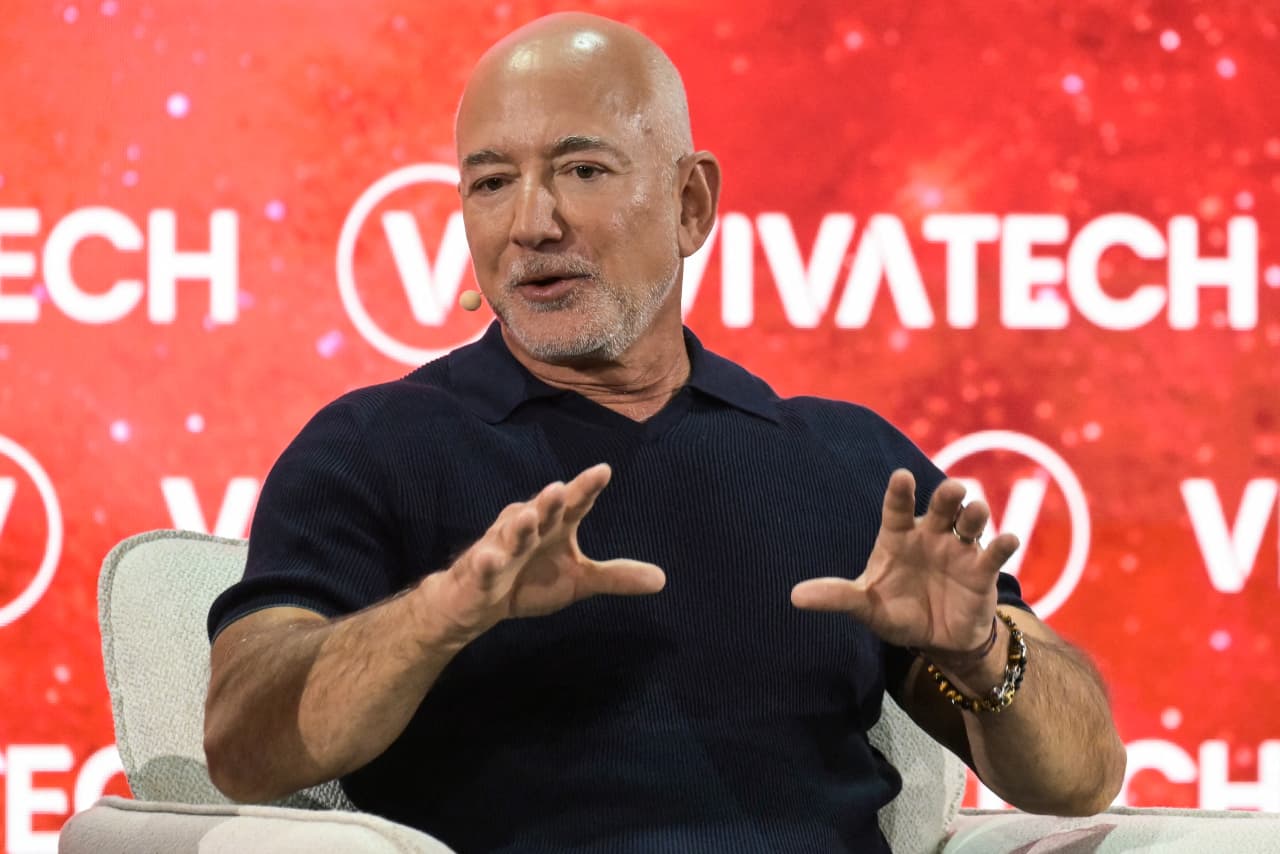
Jeff Bezos suggests that the only barrier to establishing data centers and microchip manufacturing in space is cost, not scientific feasibility. This perspective implies significant long-term economic advantages in energy efficiency and manufacturing potential, contingent on overcoming initial high investment costs.
Amazon founder Jeff Bezos recently reiterated his belief in the feasibility of establishing operational data centers in space, a concept he extends to the potential for microchip manufacturing beyond Earth's atmosphere. Bezos indicated that the primary impediment to these extraterrestrial ventures is economic viability rather than scientific or technological limitations.
The notion of orbital data centers presents several compelling economic and operational advantages. A key benefit is the natural cooling environment of space, which could significantly reduce the energy consumption and infrastructure costs associated with maintaining terrestrial data centers. Current data centers require massive cooling systems, contributing to substantial operational expenses and environmental impact. Relocating these facilities to space could alleviate these pressures, offering a more sustainable and potentially more cost-effective long-term solution.
Furthermore, the microgravity environment of space could offer unique conditions for advanced manufacturing processes, particularly for microchips. While details remain speculative, the absence of gravity might allow for the creation of components with unparalleled purity or novel architectures, potentially leading to breakthroughs in computing power and efficiency. Such advancements could have profound implications for industries reliant on high-performance computing, from artificial intelligence to scientific research.
However, the upfront investment required to develop and deploy such infrastructure remains astronomically high. Launch costs, the challenges of construction and maintenance in a hostile environment, and the complexity of ensuring secure and reliable data transfer back to Earth represent significant financial hurdles. Bezos's comments highlight that while the vision is clear, the path to commercializing space-based data infrastructure requires substantial capital investment and technological maturation to drive down costs to an economically rational level for widespread adoption.
Analyst's Take
While seemingly futuristic, the long-term impact of space-based data infrastructure could be deflationary for energy-intensive industries and enable new forms of high-value manufacturing that alleviate terrestrial resource constraints. The critical factor for market participants to monitor is the declining cost of space launch and in-orbit logistics, which could make such ventures economically viable sooner than current projections anticipate, potentially dislocating traditional terrestrial data center investment in the next decade.


