EnergyOilPrice.comJul 1, 2026· 1 min read
US and UK Back Syrian Gas Development Amid Geopolitical Shifts
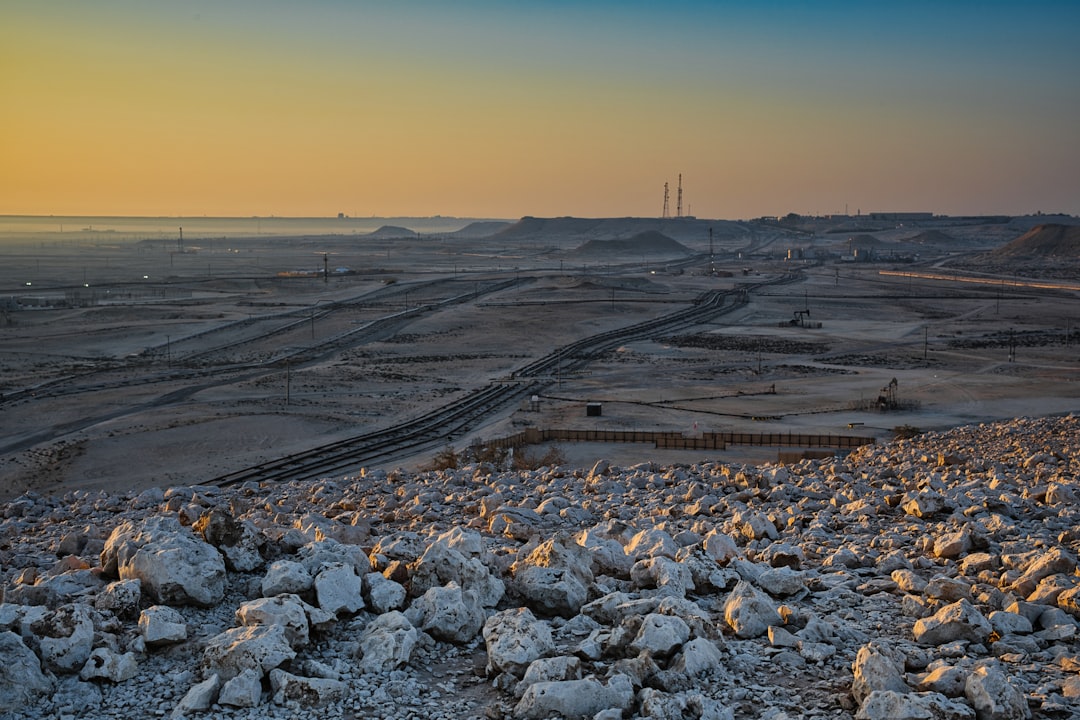
The Syrian Petroleum Company, ConocoPhillips (US), and Novaterra ConocoPhillips (UK) have signed an agreement to develop new and expand existing natural gas fields in Syria. This deal represents a strategic economic and geopolitical move by the U.S. and U.K. to influence Syria's energy future and potentially its broader economic reconstruction.
Last week, a significant energy agreement was formalized in Syria, involving the Syrian Petroleum Company (SPC), the U.S. firm ConocoPhillips, and Great Britain’s Novaterra ConocoPhillips. This tripartite deal focuses on the development of new natural gas fields and the expansion of output at existing sites within Syria. The economic implications are multifaceted, signaling a strategic alignment that could reshape Syria's energy landscape and broader geopolitical dynamics.
The agreement is seen as a pivotal step in the U.S. and U.K.'s long-term strategy for influencing Syria's future. Unlike previous reconstruction efforts in the region, such as those in Iraq, this approach appears to favor a more discreet, regionally-supported framework. While specific financial terms of the agreement have not been disclosed, the involvement of major Western energy companies suggests substantial capital investment and technological transfer, crucial for revitalizing Syria’s dilapidated energy infrastructure.
Increased natural gas production could provide Syria with a vital revenue stream, potentially impacting its economic stability and reconstruction efforts. For ConocoPhillips and Novaterra ConocoPhillips, the deal represents access to new reserves and a strategic foothold in a region with significant energy potential. The long-term objective for Washington and London extends beyond mere energy extraction, aiming to foster regional stability and economic development through indirect engagement, potentially reducing reliance on adversarial states for energy resources.
This development occurs amidst ongoing geopolitical complexities in Syria, where various international actors have competing interests. The economic partnership, spearheaded by Western firms, could alter the balance of power and influence within the country, potentially fostering new trade relationships and supply chains. The success of this venture will depend on security stability and the political willingness of regional partners to support the initiative.
Analyst's Take
This development, while ostensibly about energy, is a subtle re-evaluation of Western influence strategies in conflict zones, moving away from overt nation-building. The true second-order effect will be visible in regional capital flows and infrastructure investment, as Gulf state actors, likely Saudi Arabia, will be tacitly or explicitly encouraged to finance the broader economic revival, thus insulating Western firms from direct security risks and public perception issues. The market is currently overlooking the potential for this model to be replicated in other unstable, resource-rich nations, leading to a de-risking of certain frontier market energy investments by proxy.