MarketsMarketWatchMay 8, 2026· 1 min read
Micron's Meteoric Rise: Surpassing JPMorgan in Market Cap Amidst AI Boom
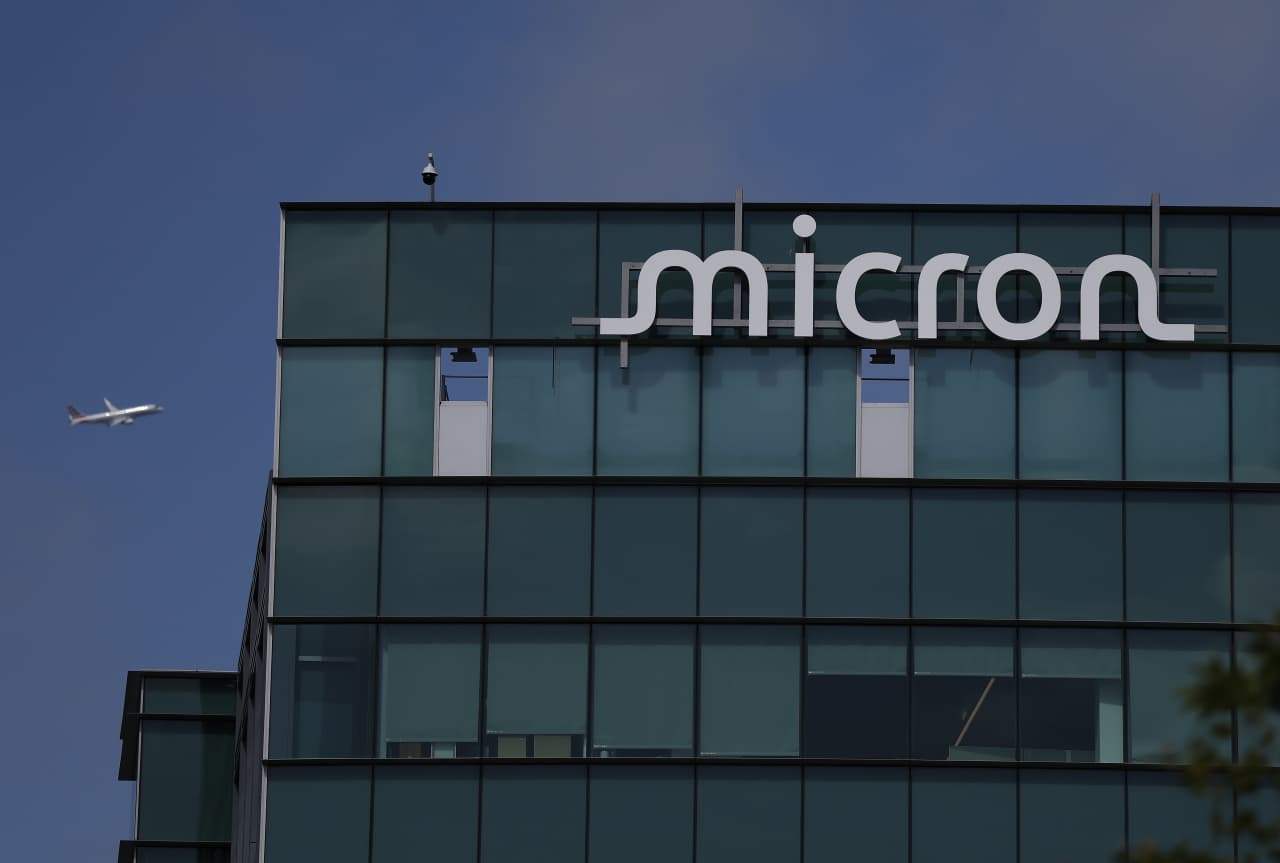
Micron Technology's market capitalization surged by $200 billion in a week, surpassing JPMorgan Chase. This dramatic rise reflects strong investor confidence driven by increasing demand for AI-enabling memory chips.
Memory chipmaker Micron Technology experienced an extraordinary week, adding approximately $200 billion to its market capitalization. This surge propelled Micron's valuation beyond that of financial giant JPMorgan Chase, a significant shift in market dynamics. The company's stock performance marked its strongest weekly gain in two decades, reflecting robust investor confidence.
The dramatic increase in Micron's market value is largely attributed to the escalating demand for high-bandwidth memory (HBM) chips, a critical component for artificial intelligence (AI) infrastructure. As the AI sector continues its rapid expansion, companies like Micron, which supply essential hardware, are seeing their valuations climb substantially. This development underscores the ongoing re-allocation of capital towards technology firms perceived as key beneficiaries of the AI revolution, even as established financial institutions like JPMorgan maintain strong fundamentals.
While JPMorgan remains a dominant force in the banking sector with consistent profitability and a vast global footprint, Micron's recent valuation milestone highlights the market's current enthusiasm for growth-oriented tech companies. The event signals a broader trend where technology innovation, particularly in AI and its enabling hardware, is commanding premium valuations, potentially recalibrating the landscape of top-tier market capitalization rankings.
Analyst's Take
Micron's valuation leap, while eye-catching, reveals an underlying liquidity shift where speculative capital is chasing AI-adjacent narratives, potentially overlooking the long-term earnings stability and defensive qualities of traditional financial institutions. This divergence suggests a market grappling with how to appropriately price future growth versus current profitability, and could signal broader sector rotation or even overextension in the most favored tech segments.


