MarketsSMH BusinessApr 26, 2026· 1 min read
Alleged Weather Sensor Tampering Raises Questions for Prediction Markets
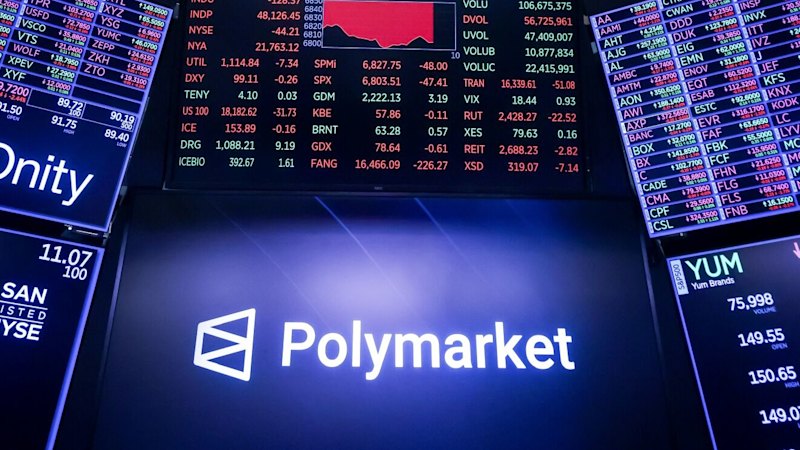
French police are investigating allegations that a hairdryer was used to tamper with official weather sensor readings to fraudulently win $47,600 on the prediction market platform Polymarket. This incident highlights significant vulnerabilities in data integrity for decentralized prediction markets and raises concerns about their reliance on external, potentially manipulable, real-world data sources.
French authorities are probing an alleged scheme involving the use of a hairdryer to manipulate official weather sensor readings, potentially influencing outcomes on the decentralized prediction market platform Polymarket. The alleged tampering aimed to secure gains totaling $47,600 from weather-related bets. This investigation highlights the vulnerability of prediction markets to external manipulation, particularly when underlying data sources are susceptible to interference.
Prediction markets, which allow users to bet on future events ranging from political outcomes to commodity prices, rely heavily on the integrity of the data inputs that determine the resolution of contracts. If external factors can be artificially altered to sway outcomes, it fundamentally undermines the fairness and credibility of these platforms. The alleged incident, while relatively small in financial scale, underscores a critical operational risk for decentralized finance (DeFi) platforms that build markets around real-world data feeds.
The economic implications extend beyond the immediate financial loss for Polymarket or its users. Such incidents could deter broader institutional adoption of prediction markets by raising concerns about market integrity and regulatory oversight. For platforms like Polymarket, ensuring robust oracle solutions – mechanisms that bring external data onto the blockchain – becomes paramount. The incident may prompt a re-evaluation of the specific data sources utilized for weather-related contracts and a push for more resilient, tamper-proof sensor networks, or a greater reliance on multi-source data aggregation to mitigate single points of failure. The incident serves as a case study for the challenges in bridging real-world events with blockchain-based financial instruments, emphasizing the need for robust verification mechanisms.
Analyst's Take
While the immediate financial impact is minor, this incident subtly exposes a systemic risk for oracle-dependent DeFi protocols: the integrity of physical-world data feeds. The real second-order effect will be an acceleration of investment into 'decentralized oracle networks' (DONs) that aggregate data from multiple independent sources, or even develop tamper-resistant physical sensors, as platforms realize the cost of a compromised oracle far outweighs the prevention investment, particularly as institutional interest in DeFi grows.


