MarketsMarketWatchJul 16, 2026· 1 min read
SpaceX's Starship Launch: A Catalyst for Valuation Amidst Market Skepticism
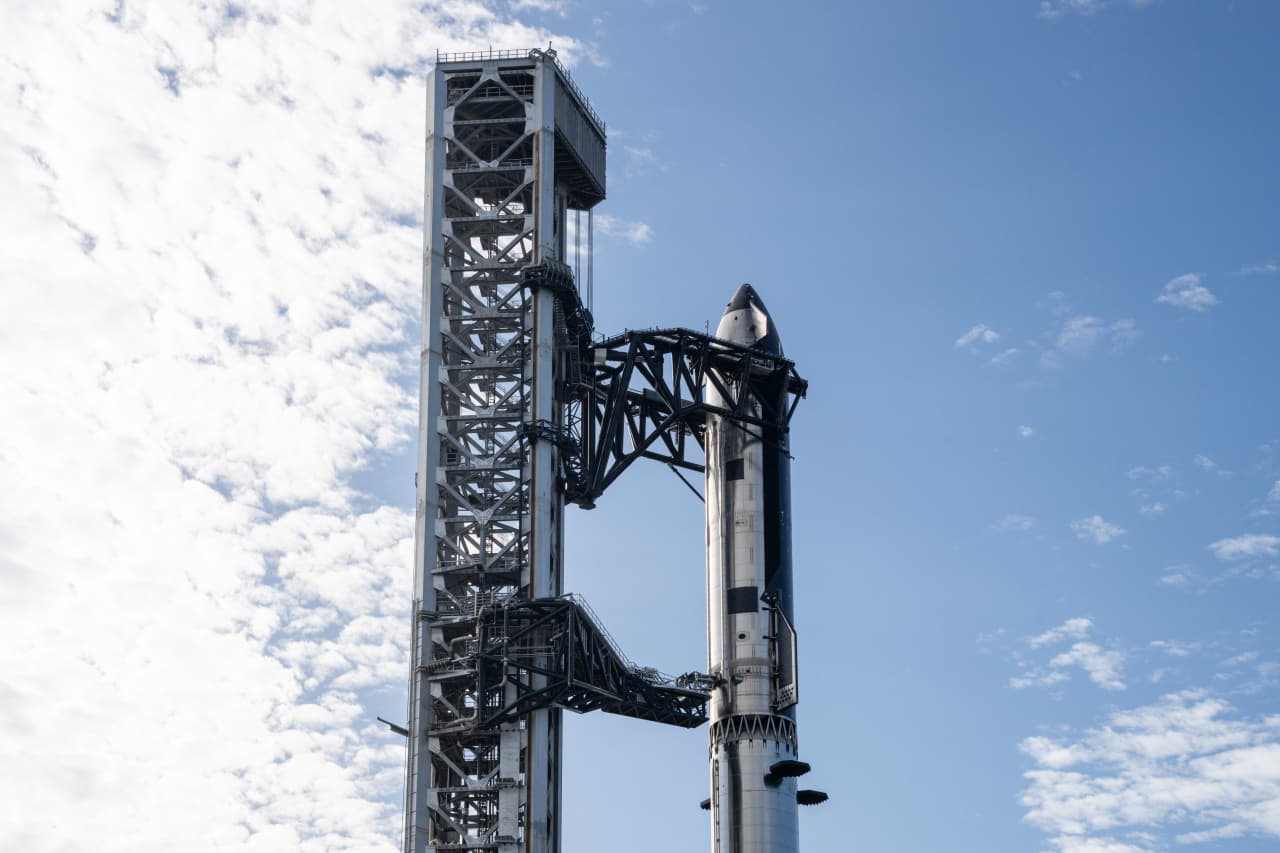
SpaceX is poised for a critical Starship launch, an event analysts consider paramount for its valuation and future growth. A successful mission is expected to validate significant capital expenditures and open new revenue streams, while a failure could pose substantial financial and operational challenges.
SpaceX is preparing for a pivotal launch of its Starship mega-ocket, an event that analysts deem crucial for the company's valuation trajectory. The successful deployment and operation of Starship is seen as the single most important immediate watch item for the aerospace firm, which remains a private entity but whose market performance is closely tracked due to its substantial capital requirements and disruptive potential.
While specific financial details are not publicly disclosed, the Starship program represents a significant portion of SpaceX's capital expenditure and future revenue generation potential. Its success is expected to unlock new capabilities for satellite deployment, lunar and Martian missions, and potentially point-to-point terrestrial travel, thereby expanding SpaceX's addressable markets and justifying its high valuation.
Conversely, any significant setbacks or failures in the Starship program could lead to substantial delays and increased development costs, impacting investor sentiment and future fundraising efforts. The company relies heavily on private capital and government contracts, both of which are sensitive to perceived progress and technological viability. A successful launch could alleviate some of the market's underlying concerns about the technical challenges and financial risks associated with such ambitious projects, potentially attracting further investment and strengthening its competitive position in the rapidly evolving space industry. The economic implications extend beyond SpaceX, potentially catalyzing broader investment in space infrastructure and related technological advancements.
Analyst's Take
The market's current assessment of SpaceX, even as a private entity, likely underprices the long-term, second-order effects of Starship's success on supply chain innovation and industrial expansion in low-Earth orbit. We should watch for increased venture capital activity in adjacent space-tech sectors and commodity price shifts for specialized materials, even before Starship achieves full operational capacity, as a leading indicator of this broader economic impact.


