MacroBBC BusinessJun 11, 2026· 1 min read
UK Regulator Probes Ryanair's Child Seating Fees Amid Competition Concerns
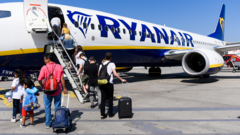
The UK's Competition and Markets Authority is investigating Ryanair's policy of charging parents to sit with their children, scrutinizing whether it constitutes an unfair commercial practice. This probe could reshape ancillary revenue strategies across the airline industry and impact family travel costs.
The UK's Competition and Markets Authority (CMA) has launched an investigation into Ryanair regarding its policy of charging parents to sit alongside their children. This probe follows concerns that the airline's practices may constitute an unfair commercial practice and potentially hinder competition within the airline sector.
The investigation will assess whether Ryanair's pricing strategy for family seating exploits a captive market, given the inherent need for parents and young children to sit together. Such practices could force families to pay additional fees, impacting household budgets and potentially creating an artificial barrier to entry for other airlines not engaging in similar charging models.
Economically, the outcome of this investigation could have broader implications for the airline industry's ancillary revenue strategies. Airlines increasingly rely on non-fare revenues, including baggage fees, seat selection charges, and onboard sales, to bolster profitability. A ruling against Ryanair could set a precedent, prompting other carriers to review or modify their own family seating policies, potentially reducing a significant revenue stream across the sector.
For consumers, a successful challenge to these charges could lead to more transparent pricing and potentially lower overall travel costs for families. Conversely, airlines might seek to recoup lost ancillary revenue through increases in base fares, or by introducing new types of charges. The CMA's intervention highlights a growing regulatory scrutiny on business practices perceived to exploit consumer vulnerabilities, particularly in sectors with high inelastic demand like air travel.
Analyst's Take
While seemingly a consumer issue, this investigation's true economic impact lies in its potential to curtail the airline industry's highly successful ancillary revenue model, a critical profit driver. A regulatory crackdown could force airlines to re-evaluate their pricing structures, potentially leading to higher base fares across the board as they seek to offset lost income, thereby shifting the burden rather than eliminating it.

