MarketsMarketWatchMay 27, 2026· 1 min read
China Aims to Revolutionize Manufacturing with Humanoid Robotics Investment
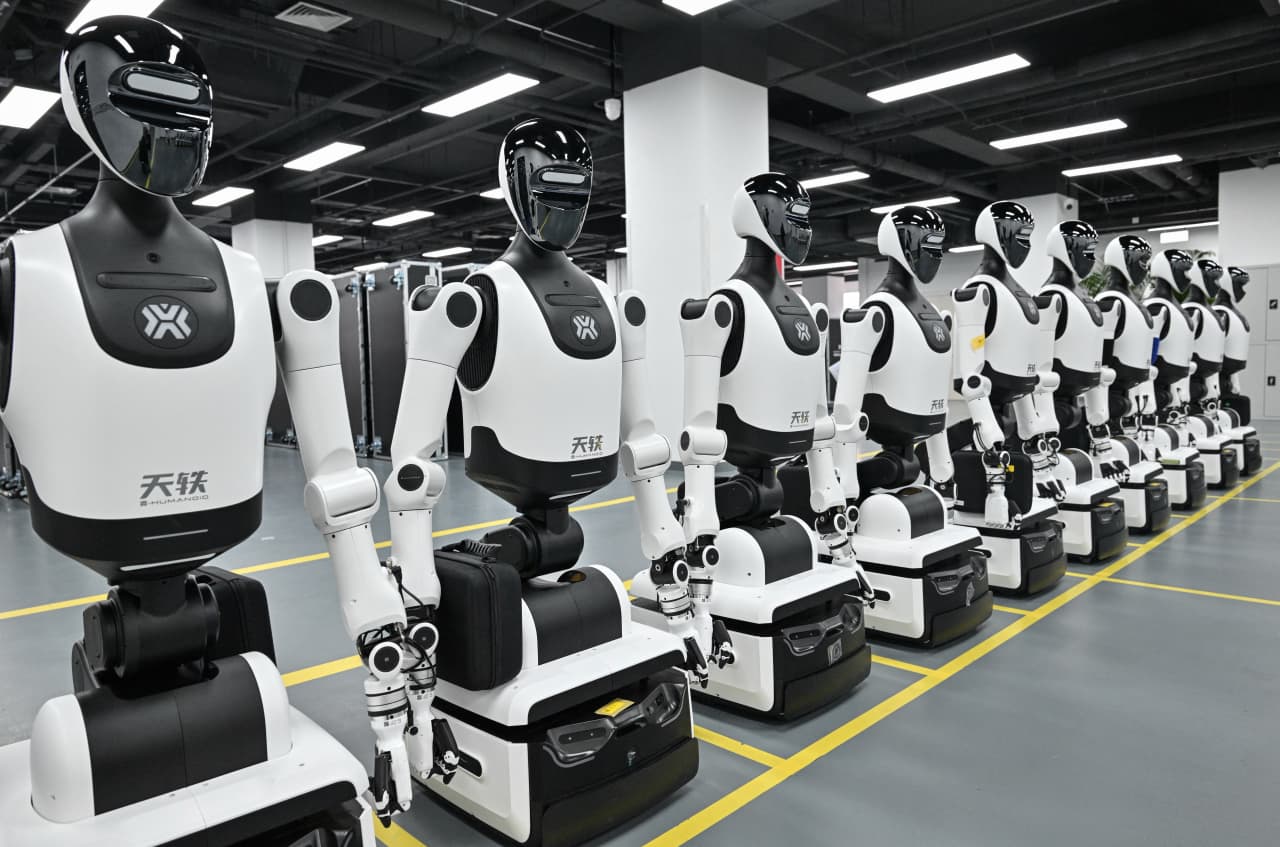
China is heavily investing in humanoid robotics to drastically cut manufacturing costs and bolster its competitive position in global markets. This strategic move aims to integrate advanced, affordable robots into factories, potentially reshaping global supply chains and export dynamics.
China is strategically investing in humanoid robotics to significantly reduce domestic factory costs and enhance its competitive edge in global manufacturing. The initiative, backed by Beijing, seeks to integrate advanced robotics into production lines, targeting a substantial increase in automation efficiency and a corresponding decrease in labor expenditures. This push is anticipated to transform the cost structure of Chinese exports, potentially offering a new wave of competitively priced goods to international markets.
The development of cost-effective humanoid robots, described as being priced less than a used car, underscores China's ambition to lead in next-generation industrial automation. This technological leap is not merely about replacing human labor but about creating a more flexible and adaptable manufacturing ecosystem. The long-term economic implications include a potential re-shaping of global supply chains as other nations assess their own automation strategies in response to China's advancements. Domestically, while aiming for efficiency gains, the policy also raises questions regarding labor force transitions and the need for new skill development within the Chinese economy to adapt to an increasingly automated industrial landscape.
Analyst's Take
While the immediate focus is on cost reduction and export competitiveness, the true second-order effect will be the accelerating global race for automation supremacy, particularly in emergent markets. This could trigger a new phase of 'reshoring' for advanced manufacturing in developed economies that can afford the capital expenditure, or conversely, further entrench China's position as the manufacturing hub for developing nations adopting cheaper automation, potentially widening the global economic disparity in industrial capabilities rather than leveling it.


