MarketsMarketWatchMay 5, 2026· 1 min read
US Treasury Debt Concerns Emerge Amidst Yield Volatility
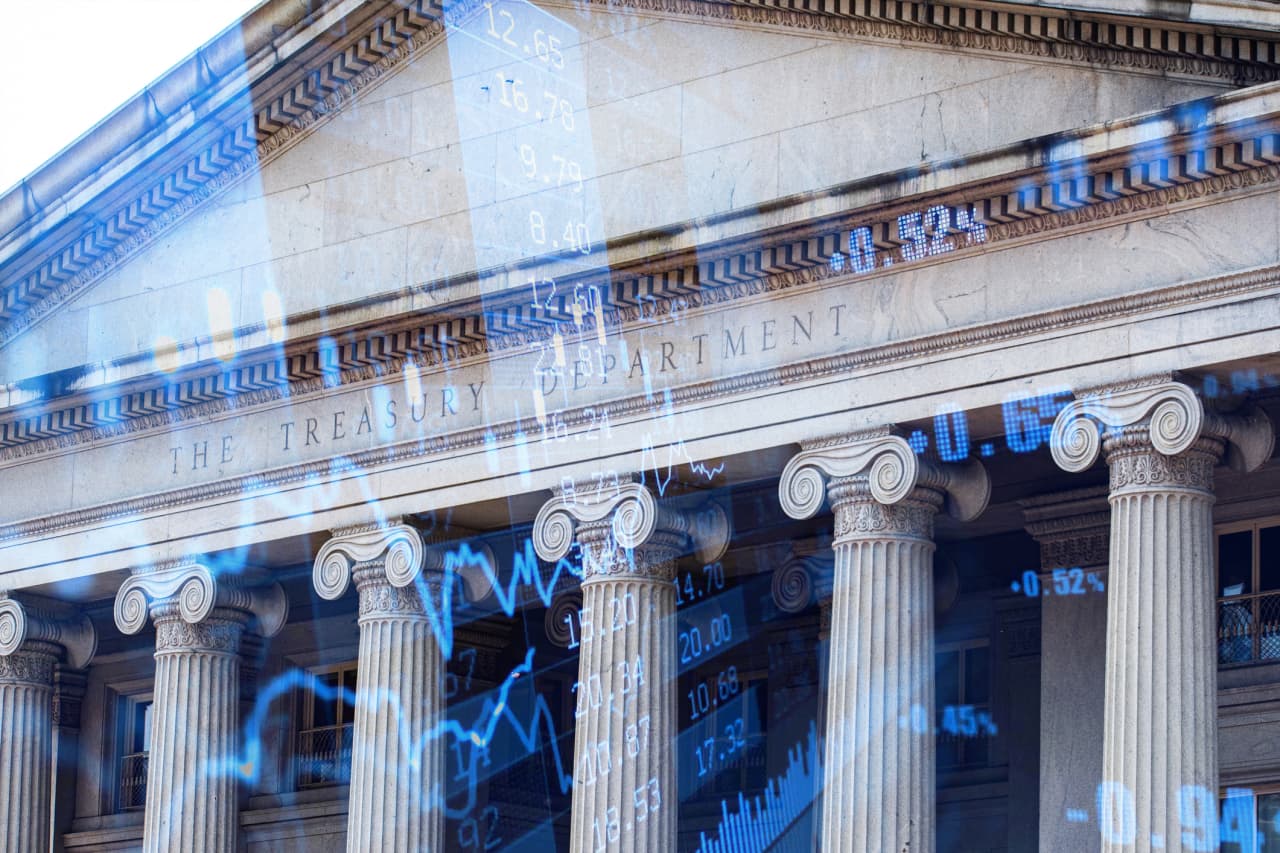
Former Treasury Secretary Steven Mnuchin has raised concerns about the U.S. government's capacity to finance its debt, noting a lack of contingency plans. This statement emerges as the historical profitability of betting on long Treasury bonds amid 5% yields faces re-evaluation in the current volatile market.
Recent commentary from former Treasury Secretary Steven Mnuchin has highlighted emerging concerns regarding the U.S. government's ability to finance its debt, particularly in the absence of pre-emptive 'break-the-glass' solutions. This comes amidst a period where long-dated Treasury bonds have seen significant yield fluctuations, challenging investor assumptions about the stability of this asset class.
Historically, investing in long Treasury bonds when yields approached 5% has proven to be a profitable strategy over the past several years, offering attractive returns as yields subsequently moderated. However, current market conditions, characterized by persistent inflationary pressures and a shifting monetary policy landscape, are raising questions about the continued viability of this trading playbook.
The implied fragility of the U.S. Treasury market, as articulated by Mnuchin, points to potential long-term fiscal challenges. While specific details of potential financing difficulties were not elaborated, the mere mention by a former Treasury chief underscores a latent risk within the world's largest and most liquid bond market. This sentiment could contribute to increased volatility and a re-evaluation of sovereign risk premiums, particularly if fiscal deficits remain elevated and debt servicing costs continue to rise.
From an economic perspective, any perceived difficulty in financing U.S. debt could lead to higher borrowing costs for the government, potentially crowding out private sector investment and impacting overall economic growth. Furthermore, a decline in confidence in U.S. Treasuries, traditionally seen as a safe-haven asset, could have broader implications for global financial stability and capital flows, forcing investors to seek alternative low-risk investments.
Analyst's Take
Mnuchin's 'break-the-glass' comment hints at a potential underpricing of tail risk in the Treasury market, particularly regarding long-term fiscal unsustainability rather than immediate default. This underlying worry, combined with persistent inflation, could lead to a structural repricing of the term premium, pushing yields higher even as inflation expectations moderate, potentially challenging the Federal Reserve's ability to normalize its balance sheet without significant market disruption.


