MarketsMarketWatchJul 16, 2026· 1 min read
SpaceX Secondary Share Price Dip Mirrors Historical IPO Underperformance
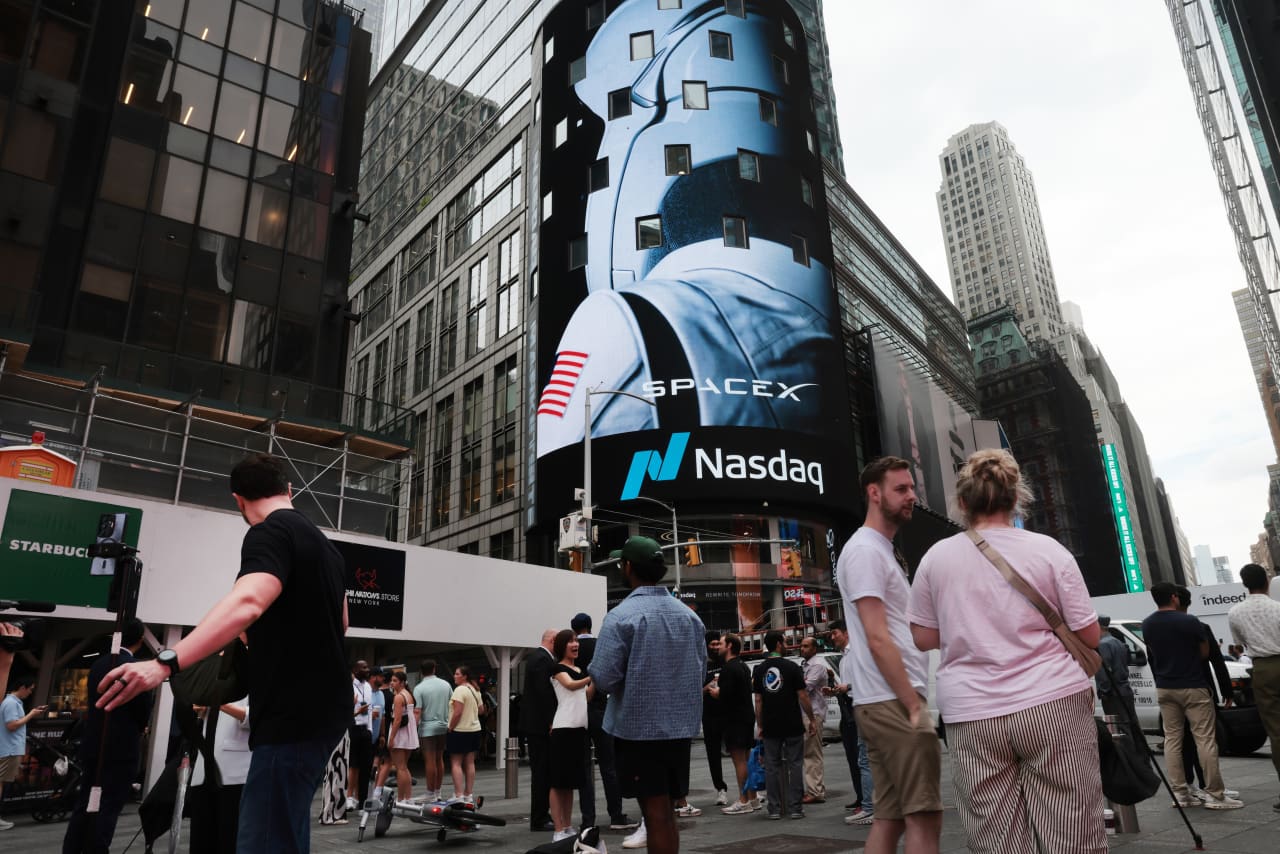
Secondary market trading for SpaceX shares has seen valuations fall below $135, reflecting a common trend where many highly anticipated companies trade below initial valuations post-listing. This dynamic, while not indicative of fundamental weakness, highlights the speculative nature of private market investments and typical post-IPO price corrections.
Recent secondary market trading of SpaceX shares has seen valuations dip below $135, prompting scrutiny over the company's private market trajectory. While not a traditional initial public offering (IPO), the observed price action in private secondary transactions bears resemblance to the common post-IPO performance of many prominent companies.
Historical data indicates that nearly half of major public listings fall below their initial offering price and often remain suppressed for several years. This trend, exemplified by Meta Platforms (formerly Facebook) post-IPO experience where its stock traded significantly below its offering price for an extended period, suggests that initial investor enthusiasm or private valuations may not always translate into sustained market gains.
For SpaceX, a company valued in excess of $150 billion in its most recent tender offer, the secondary market dip does not necessarily signal fundamental weakness. Instead, it may reflect typical market dynamics where early investors or employees capitalize on liquidity opportunities, leading to price volatility. The company's core business, encompassing satellite internet service Starlink and its ambitious space launch and exploration programs, continues to attract significant investor interest and demonstrate technological advancements.
However, the recent price performance underscores the inherent risks and speculative nature of pre-IPO investments, even for highly anticipated ventures. It also highlights the distinction between private market valuations, which can be influenced by specific tender offer mechanics and liquidity premiums, and the eventual scrutiny of broader public markets. As long as SpaceX remains privately held, its valuation will largely be determined by these controlled secondary transactions and investor appetite for private equity exposure in high-growth, capital-intensive sectors.
Analyst's Take
The SpaceX secondary market price dip, rather than signaling fundamental issues, likely reflects liquidity-driven sales by early investors or employees. This could be a leading indicator of a more conservative valuation environment for private equity, potentially impacting the timing and pricing of future high-profile tech IPOs in the next 12-18 months as private valuations converge closer to public market realities.


