MacroBBC BusinessMay 27, 2026· 1 min read
China's EV Dominance Reshapes Global Auto Industry Landscape
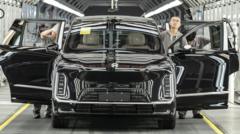
Chinese electric vehicle (EV) manufacturers are asserting dominance over critical automotive industry ecosystems, challenging global carmakers. This leadership in production, technology, and supply chains creates significant competitive pressures and economic implications for the established automotive sector.
A recent assessment of China's electric vehicle (EV) manufacturing sector reveals its significant lead in establishing the technological and supply chain ecosystems that are increasingly defining the global automotive industry. This dominance poses a substantial competitive challenge for established international automakers.
Chinese EV factories are demonstrating advanced vertical integration and economies of scale, allowing them to produce EVs at lower costs and faster innovation cycles. This encompasses not just vehicle assembly but also key components such as battery technology, charging infrastructure, and autonomous driving software. The competitive advantage extends to both domestic market share and an expanding presence in international markets, particularly within developing economies.
For incumbent global carmakers, the implications are multi-faceted. They face mounting pressure to accelerate their own EV transitions, invest heavily in R&D, and potentially re-evaluate their supply chain strategies to achieve similar cost efficiencies and technological prowess. This competitive shift could lead to significant capital expenditure increases, potential mergers and acquisitions, or strategic partnerships with Chinese firms to access technology and production capabilities. Furthermore, the rapid ascent of Chinese EVs could alter trade balances and create new dynamics in intellectual property and manufacturing hubs globally. The long-term economic impact includes potential job displacement in traditional auto manufacturing regions and a recalibration of automotive industry investment flows.
Analyst's Take
The market may be underestimating the second-order geopolitical implications of China's EV dominance, beyond just trade imbalances. As critical components like batteries become concentrated, this creates potential leverage points for China in future economic and strategic negotiations, reminiscent of historical resource monopolies. We could see accelerated efforts by Western nations to onshore or 'friend-shore' battery and EV component manufacturing, even at higher costs, impacting global investment flows and potentially delaying broader EV adoption if supply chains become fragmented.

