MacroBBC BusinessMay 22, 2026· 1 min read
Trump Calls for 'Totally Independent' Fed Chair, Reaffirming Past Stance
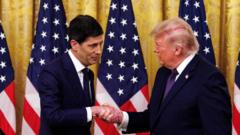
Former President Donald Trump has expressed a desire for a 'totally independent' Federal Reserve Chair, echoing sentiments from his prior term where he publicly pressed for interest rate cuts. This statement underscores the ongoing debate regarding central bank autonomy versus political influence in monetary policy.
Former President Donald Trump has reiterated his preference for a 'totally independent' Federal Reserve Chair, a position he also advocated during his previous term. This statement, made public recently, aligns with his historical critique of the Federal Reserve's monetary policy decisions, particularly regarding interest rates.
During his presidency, Trump frequently and publicly urged the Federal Reserve, then led by Jerome Powell, to implement interest rate cuts, contending that higher rates hindered economic growth. This pressure often led to market speculation about the Fed's autonomy and potential political influence on its decisions.
The concept of an independent central bank is a cornerstone of modern economic policy, intended to insulate monetary decisions from short-term political cycles and enable a focus on long-term economic stability, such as controlling inflation and maximizing employment. The Federal Reserve operates with a dual mandate to achieve these goals, making decisions based on economic data rather than political directives.
Trump's renewed emphasis on a 'totally independent' chair, while seemingly contradictory given his past interventions, can be interpreted as a desire for a chair who would independently arrive at conclusions aligning with his economic philosophy, particularly a preference for lower interest rates. This stance highlights a perennial tension between political aspirations for economic stimulus and the central bank's mandate for price stability and sustainable growth. The implications of such a position become particularly relevant during periods of economic uncertainty or differing opinions on optimal monetary policy.
Analyst's Take
While the headline suggests a commitment to independence, the underlying subtext reveals a consistent preference for a chair whose independent judgments would align with an accommodative monetary policy, specifically lower interest rates. This signaling could subtly influence market expectations for future Fed appointments and the perceived political tolerance for hawkish stances, potentially contributing to a slight 'dovish' tilt in long-term rate outlooks even without explicit policy shifts. The timing, ahead of any potential presidential campaign, serves as an early indicator of a potential monetary policy stance should a change in administration occur.

