MacroBBC BusinessMay 5, 2026· 1 min read
OpenAI Co-founder's Testimony Sheds Light on Early Leadership Tensions
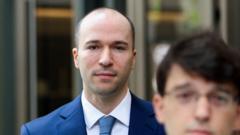
Testimony from OpenAI co-founder Greg Brockman during a high-profile trial reveals early leadership tensions and ideological disputes within the AI firm, particularly concerning Elon Musk. This litigation highlights internal governance challenges and could influence investor confidence and broader regulatory scrutiny in the AI sector.
During the second week of a month-long trial involving OpenAI's Sam Altman, co-founder Greg Brockman's testimony offered a glimpse into the foundational dynamics and early leadership tensions at the artificial intelligence research company. While the specifics of the 'I thought he was going to hit me' remark refer to an interaction with Elon Musk, the broader context of the testimony underscores the intense personalities and disagreements that characterized OpenAI's nascent stages.
This litigation, centered on Altman, implicates internal governance and strategic direction. The court proceedings are bringing to light historical disputes over the company's mission – whether to prioritize open-source development for public benefit or pursue commercialization, a debate that has significant implications for the AI industry's future structure and competitive landscape. The public airing of these internal conflicts could influence investor confidence in OpenAI's current leadership and its long-term strategic stability.
For the broader technology sector, particularly the rapidly evolving AI segment, such high-profile legal battles and revelations about internal discord can introduce an element of regulatory scrutiny. Policymakers are already grappling with how to govern AI development and deployment, and details emerging from this trial could inform future legislative efforts concerning corporate governance in AI firms, intellectual property, and competitive practices.
Economically, the trial's outcome and the sustained public discussion around OpenAI's internal affairs could affect its valuation and its ability to attract and retain top talent. Any perceived instability or shift in strategic focus could prompt re-evaluations by investors and partners, potentially impacting investment flows into the broader AI startup ecosystem. The ongoing legal saga serves as a reminder of the inherent complexities in scaling innovative technologies under intense competitive and ideological pressures.
Analyst's Take
While seemingly a personnel dispute, the public unveiling of early ideological rifts between OpenAI's founders and key figures like Elon Musk could signal a looming regulatory push to define 'public good' versus 'profit' in AI development, potentially impacting funding structures and open-source commitments across the industry by mid-2025. This narrative could be mispriced by markets focused solely on current operational performance, overlooking future policy-driven shifts.

