MacroBBC BusinessMay 4, 2026· 2 min read
Waste Management Embraces Robotics Amid Labor Shortages
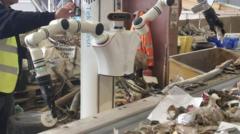
The waste management sector is adopting humanoid robots to automate sorting processes, addressing chronic labor shortages and aiming for increased operational efficiency. This technological shift has significant economic implications for labor markets and operational costs within the industry.
The waste management industry is increasingly turning to advanced automation, specifically humanoid robots, to address persistent labor shortages. This shift signifies a broader trend within industrial sectors struggling to attract and retain human workers for demanding or undesirable tasks. While automation has long been present in waste sorting facilities, the integration of more sophisticated robotics indicates a strategic move towards greater operational efficiency and reduced reliance on human capital.
The economic implications are multifaceted. For waste management companies, the upfront capital expenditure for robotics represents a significant investment, but it promises long-term savings through reduced labor costs, potentially lower accident rates, and improved sorting accuracy. This could translate to higher profit margins and increased capacity for processing waste streams, aligning with environmental goals for recycling and resource recovery. The adoption of these technologies also mitigates the risk of operational disruptions due to labor strikes or public health crises.
From a labor market perspective, this development underscores the ongoing transformation of industrial employment. While it may displace some manual sorting jobs, it is likely to create new demand for skilled technicians to operate, maintain, and program these robotic systems. This necessitates a workforce upskilling and retraining effort to bridge the evolving gap between human labor supply and industry demand. The efficiency gains from robotics could also enable waste management firms to better manage rising operational costs, potentially influencing the fees charged to municipalities and businesses.
Furthermore, the integration of humanoid robots specifically suggests an attempt to replicate human dexterity and adaptability in complex sorting tasks. This advanced capability could enable more granular waste separation, potentially increasing the value of recycled materials and contributing to a more circular economy. As labor markets tighten across various sectors, the waste management industry's pivot to advanced robotics serves as a bellwether for how other physically demanding or repetitive industries might adapt to similar workforce challenges.
Analyst's Take
While immediately addressing labor scarcity, the true second-order effect of widespread humanoid robot adoption in waste management will be the market's re-evaluation of 'unskilled' labor's future pricing and availability across multiple industrial sectors, not just waste. We're likely to see a divergence where human labor in these roles becomes increasingly specialized for complex, non-repetitive tasks, or conversely, commands a higher premium for tasks robots cannot yet perform, accelerating a broader industrial re-skilling imperative over the next 3-5 years.

