MacroBBC BusinessMay 11, 2026· 1 min read
US Business Leaders to Join Trump on China Trip Amid Trade Tensions
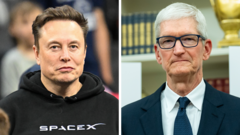
Seventeen US executives, including Elon Musk and Tim Cook, are expected to accompany President Trump on his visit to China to meet President Xi Jinping. This high-level business presence signals a focused effort to address trade relations and economic concerns between the two nations.
Seventeen prominent US corporate executives, including Tesla's Elon Musk and Apple's Tim Cook, are anticipated to accompany President Trump on an upcoming state visit to China. The delegation is expected to engage with Chinese President Xi Jinping during the trip, signaling a high-level dialogue between the two nations.
The presence of leaders from major American companies underscores the significant economic interests at stake as the US seeks to address its trade relationship with China. While specific agendas for individual executives are not public, their participation suggests a focus on market access, intellectual property protections, and the broader trade deficit. Companies like Apple and Tesla have substantial manufacturing operations and sales markets in China, making trade stability and favorable regulatory environments critical to their bottom lines.
This high-profile business contingent is likely intended to project a unified front to Beijing, emphasizing the collective American business community's concerns and aspirations within the Chinese market. The discussions are expected to touch upon various aspects of bilateral trade, potentially paving the way for further negotiations or agreements designed to rebalance trade flows and resolve ongoing economic friction. The outcome of these meetings could influence future investment decisions and supply chain strategies for multinational corporations operating across both economies.
Analyst's Take
While the headline focuses on the optics of executive attendance, the true economic signal will be found in any concrete market access or intellectual property commitments that emerge, rather than ceremonial announcements. The market may be overlooking the potential for these high-level discussions to solidify existing supply chain dependencies, effectively hedging against radical decoupling despite protectionist rhetoric.

