MacroBBC BusinessApr 29, 2026· 1 min read
Trump-Powell Friction Highlights Political Pressure on Fed Independence
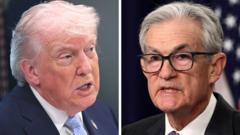
Former President Donald Trump frequently and publicly criticized Federal Reserve Chair Jerome Powell's monetary policy decisions, particularly advocating for lower interest rates. This unprecedented executive pressure on the central bank tested the perceived independence of the Federal Reserve.
The contentious relationship between former President Donald Trump and Federal Reserve Chair Jerome Powell underscored the persistent tension between political leadership and central bank autonomy. Throughout Trump's presidency, particularly from 2018 to 2020, he frequently and publicly criticized Powell and the Federal Open Market Committee's (FOMC) monetary policy decisions, specifically advocating for lower interest rates.
Trump's criticisms intensified as the Fed pursued a path of interest rate normalization following years of accommodative policy. He repeatedly labeled Powell's actions as detrimental to U.S. economic growth and the stock market, often demanding rate cuts. This sustained pressure diverged significantly from traditional presidential practice, which typically respects the Fed's operational independence to maintain credibility and effectively manage monetary policy.
The economic implications of this friction are multi-faceted. While the Fed maintained its commitment to its dual mandate of maximum employment and price stability, the public nature of the disagreements raised questions about the institution's ability to resist political influence. Market participants often watched these exchanges closely, assessing potential impacts on future monetary policy decisions and the Fed's perceived independence. The administration's rhetoric, at times, introduced an additional layer of uncertainty into financial markets, particularly during periods of economic volatility.
Despite the unprecedented public critiques, the Federal Reserve largely continued its course, adjusting policy based on economic data rather than presidential demands. However, the legacy of this period highlights the vulnerability of central bank independence to executive pressure, a dynamic that remains relevant in discussions about economic policy formulation and the role of autonomous institutions in a politically charged environment.
Analyst's Take
While this historical friction primarily highlighted political interference, its more subtle implication is the long-term erosion of public trust in central bank impartiality, potentially increasing market sensitivity to future political rhetoric concerning monetary policy. The underlying narrative of 'blaming the Fed' for economic headwinds may resurface, influencing investor sentiment and potentially leading to overreactions to minor policy shifts in the next economic cycle, regardless of underlying fundamentals.

