EnergyChannel News Asia BusinessApr 27, 2026· 1 min read
Japanese Automakers Eye China as EV Production Hub, Shifting Global Strategy
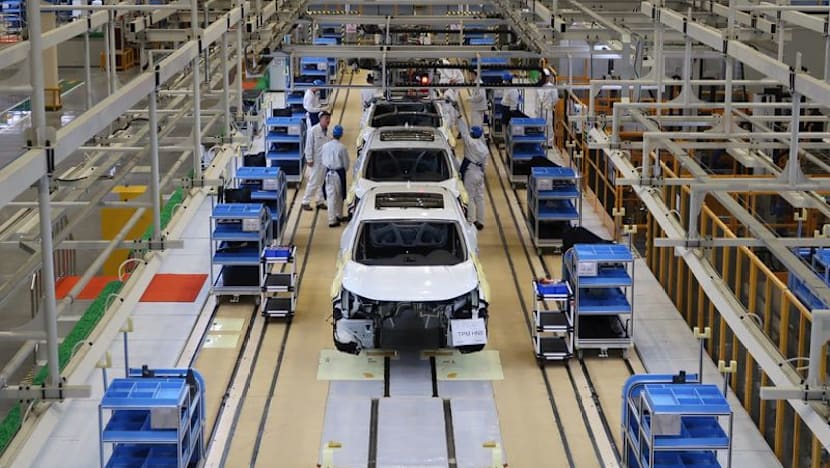
Japanese automakers are increasingly utilizing China as a manufacturing and export hub for electric vehicles, moving beyond its role solely as a consumer market. This strategy aims to leverage China's advanced EV supply chain and manufacturing efficiencies to enhance global competitiveness against rapidly growing Chinese brands.
Japanese automotive giants are increasingly leveraging China beyond its traditional role as a consumer market, transforming it into a critical manufacturing and export base for electric vehicles (EVs). This strategic pivot signals a significant shift in their global competitive approach, particularly as they contend with the rapid ascent of domestic Chinese EV manufacturers.
Historically, Japanese automakers prioritized domestic production or established facilities in key consumer markets. However, the advanced state of China's EV supply chain, coupled with its manufacturing efficiencies and established technological infrastructure, presents an compelling advantage. By producing EVs in China, these companies can potentially reduce manufacturing costs, accelerate development cycles, and tap into a mature ecosystem of battery suppliers and EV component manufacturers.
This strategic redirection is driven by the intensifying global competition in the EV sector. Chinese EV brands have demonstrated significant innovation and cost-effectiveness, gaining market share both domestically and internationally. For Japanese carmakers, establishing a strong manufacturing presence in China allows them to directly harness these efficiencies and potentially enhance their competitiveness in global markets. It also facilitates a closer feedback loop with the world's largest and most dynamic EV market, enabling faster adaptation to evolving consumer preferences and technological trends.
The implications extend to global supply chains and trade dynamics. A shift of production eastward for export markets could recalibrate existing automotive manufacturing footprints and alter trade balances. Furthermore, it underscores the growing influence of China's industrial base in shaping the future of global automotive production, particularly in the electrification era. The move represents a pragmatic adjustment to the evolving landscape of the automotive industry, where technological leadership and cost efficiency in EV production are paramount.
Analyst's Take
This shift by Japanese automakers into China for EV manufacturing isn't just about cost-cutting; it's a strategic concession of supply chain leadership and a tacit admission that Western nations are falling behind in EV industrial policy. The long-term implication is a further cementing of China's dominance in battery and EV component manufacturing, making decoupling efforts significantly harder and increasing global reliance on Chinese production for critical green technologies.