TradeSCMP BusinessApr 28, 2026· 1 min read
China's EV & Battery Giants Race to Halve Charging Times
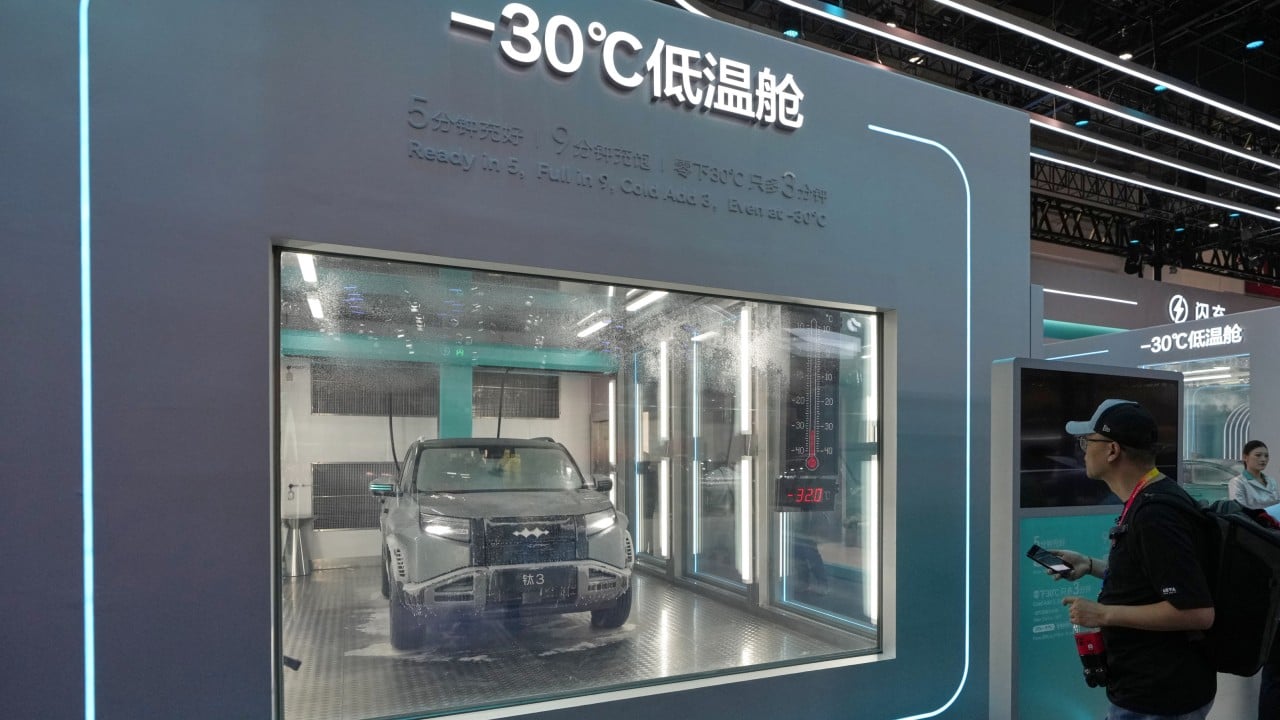
Chinese EV and battery manufacturers are accelerating efforts to develop ultra-fast charging technologies, targeting under 10-minute charging times for significant battery capacity gains. This competitive drive, showcased at the Beijing Auto Show, aims to enhance EV appeal and solidify China's leadership in the global EV market.
Chinese electric vehicle (EV) manufacturers and battery producers are intensely focused on reducing charging times, a key theme at the recent Beijing Auto Show. Industry leaders BYD and Contemporary Amperex Technology Ltd (CATL) have spurred a competitive race to develop ultra-fast charging technologies.
The 10-day event, which concluded on May 3rd, saw numerous companies, including second-tier battery suppliers like CALB Group, EVE Energy, and Sunwoda, unveil products capable of charging EV batteries from 10% to 70% in under 10 minutes. This technological push is a strategic response to consumer demand for greater convenience and reduced range anxiety, aiming to make EVs a more compelling alternative to internal combustion engine vehicles.
The economic implications of this innovation are significant. Faster charging reduces the time spent at charging stations, effectively increasing the utility and market appeal of EVs. For battery manufacturers, this technological advancement represents a crucial competitive differentiator, potentially shifting market share within the rapidly expanding EV ecosystem. For EV makers, integrating such technology could drive sales volumes and accelerate the transition away from fossil fuel-powered vehicles, impacting related sectors like energy infrastructure and raw material demand. The rapid development underscores China's continued dominance and innovation leadership in the global EV and battery supply chain.
Analyst's Take
While headline-grabbing charging speeds are impressive, the true economic dividend will materialize when grid infrastructure and charging station availability can reliably support this rapid power draw at scale. The current focus on battery tech overlooks the looming bottleneck of grid strain and the significant investment required in distributed energy solutions, which could become a future growth sector or a drag on EV adoption if not addressed proactively.